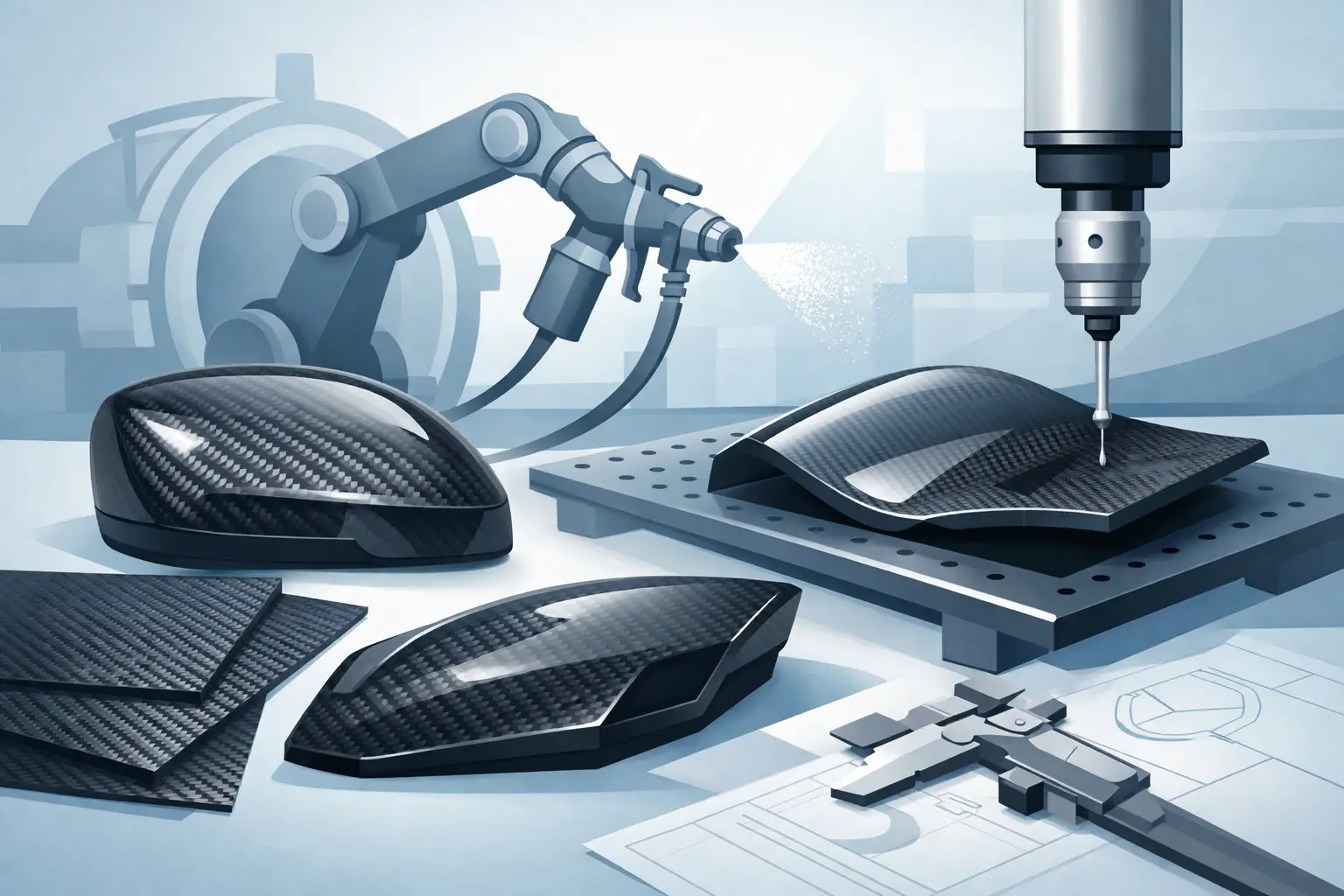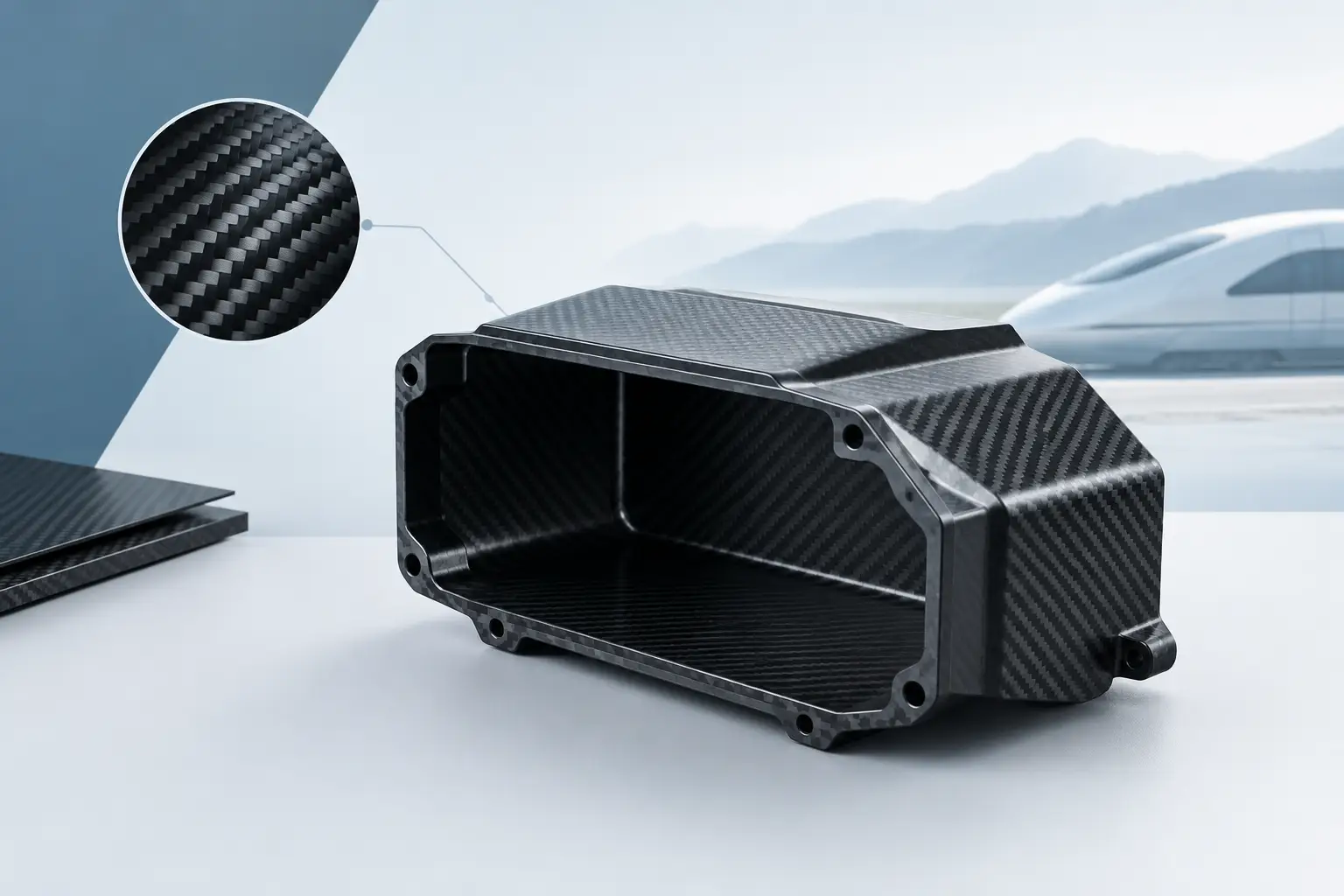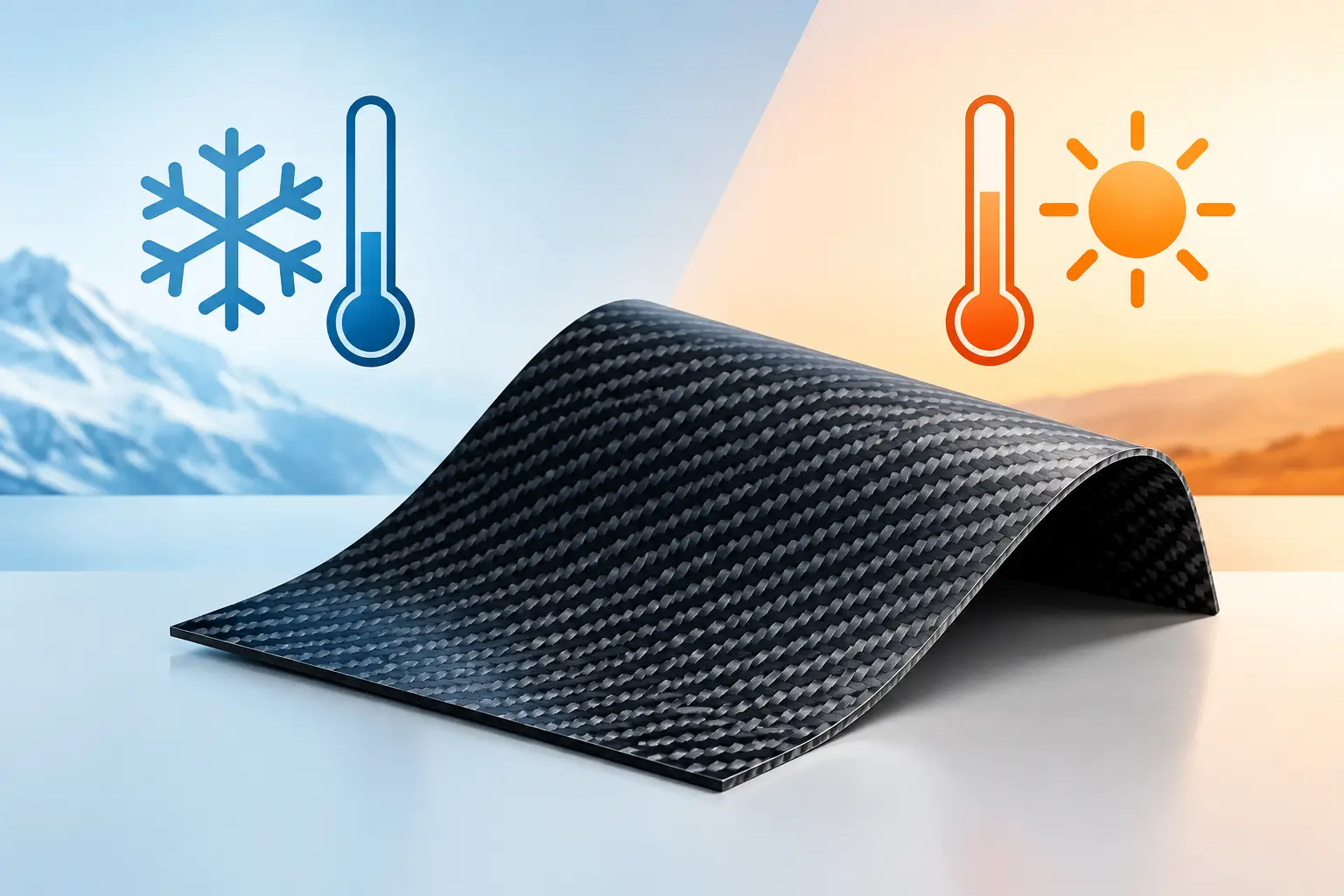
A visible carbon component can be structurally perfect and still fail due to the tool surface: through pores, warping, telegraphing, or an uneven fiber appearance. Choosing the right carbon tool is therefore not just a decision about mold making, but about component quality, process reliability, cycle time, and the cost-effectiveness of the entire production.
For highly stressed composite components, the following applies: The tool is not a downstream cost block. It is the precise interface between design, material, temperature, pressure, and surface. Especially in Prepreg processes in the autoclave, its design determines whether demanding geometries can be reproducibly manufactured in prototypes, small series, or production runs.
Component Requirements Define the Tool
The starting point is not the choice between aluminum, steel, or composite. The decisive factor is the component profile. What loads will the part bear? What surface class is required? How complex are the undercuts, radii, flanges, and parting lines? And how many cycles must the tool reliably perform?
A structural part for motorsport or industry demands different priorities than a visible carbon cover for a high-end vehicle interior. For load-bearing components, dimensional accuracy, fibre orientation, defined laminate thickness, and process windows are the focus. For visible parts, optical reproducibility is added: any irregularity in the tool surface can telegraph into the component.
Component size also changes the decision. Large molds react more strongly to temperature differences and require particularly controlled stiffness. Small, highly complex components, on the other hand, can benefit from modular inserts if demolding and local detail accuracy cannot otherwise be reliably controlled.
Evaluating Quantities Realistically
The economically appropriate tooling solution depends less on an abstract quantity than on the required number of cycles under real process conditions. A tool for ten development components does not need the same reserves as a mold for several hundred autoclave cycles.
However, tools calculated too tightly often cause higher follow-up costs than a high-quality setup. Repairs, rework, scrap, or unclear dimensional deviations interrupt production and jeopardize deadlines. For small series with recurring orders, durable, properly documented tools are therefore often the more economical choice.
Material Choice: Integrating Temperature, Stiffness, and Surface
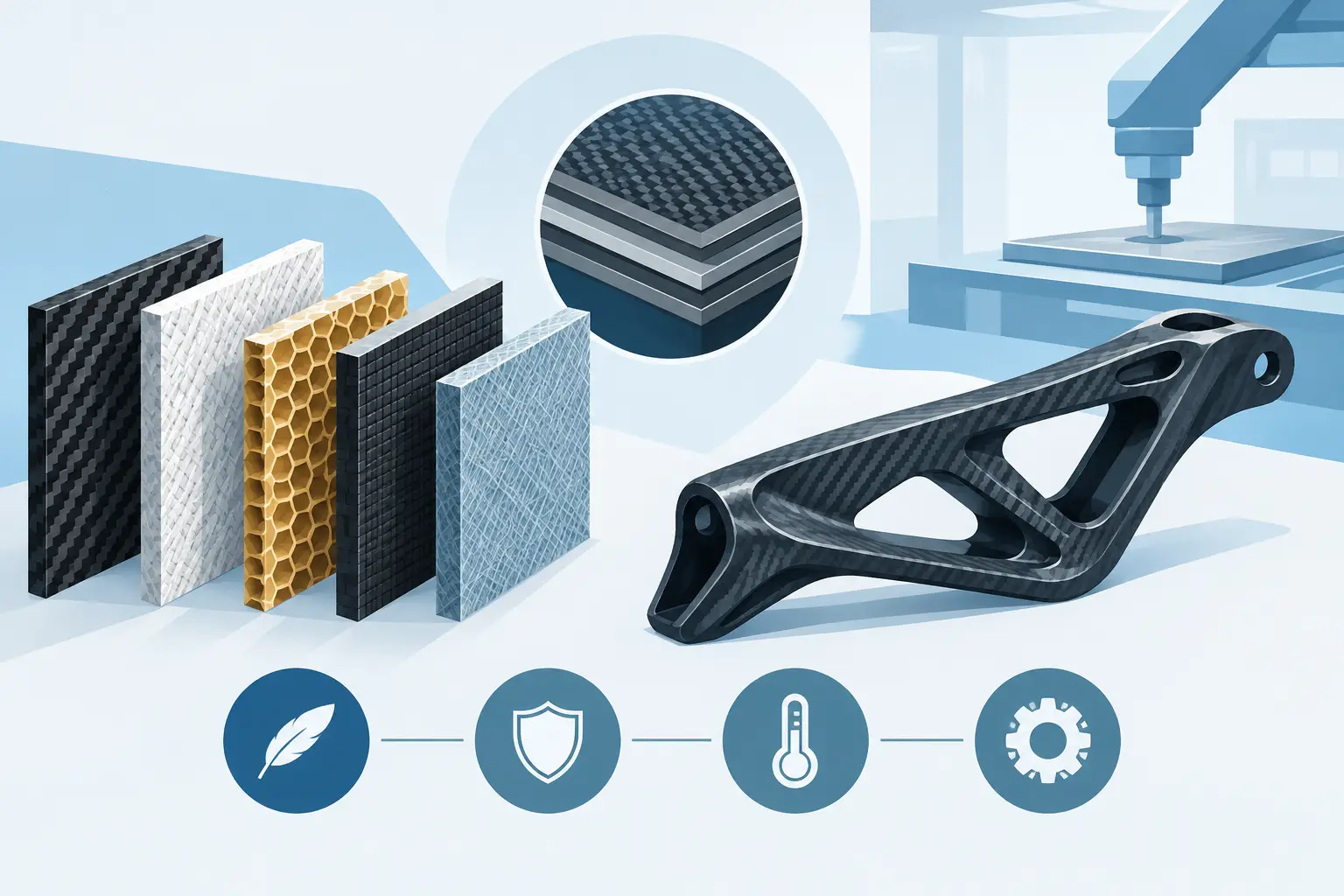
Tooling materials differ in more than just purchase price. They behave differently during temperature changes, store heat differently, and react differently to mechanical stress. The coefficient of thermal expansion, temperature resistance, thermal conductivity, and surface stability are particularly relevant for the selection.
Aluminum for Precise, Temperature-Controlled Processes
Aluminum tools offer high thermal conductivity. This ensures uniform temperature distribution and can reduce heating and cooling times. With machined molds, complex contours, integrated vacuum connections, and defined flange areas can be precisely implemented.
However, the high thermal expansion must be taken into account during design. For large components or tight tolerances, it can be decisive, especially if the tool and laminate have different expansion values. Aluminum is therefore not a blanket standard solution, but highly dependent on component size, curing cycle, and tolerance specifications.
Steel for High Loads and Long Service Life
Steel tools excel where maximum wear resistance, high dimensional stability, and a very long service life are required. They are suitable for high-stress production environments, recurring mechanical loads, or processes with high requirements for the durability of edges and sealing surfaces.
This is offset by higher costs, higher weight, and longer thermal reaction times. For a prototype or a small Prepreg series, this effort may be disproportionate. However, if permanently high quantities and tightly secured processes are required, steel is a robust option.
Composite Tools for Matched Expansion
Tools made of composite material can be particularly useful when their thermal behavior is specifically matched to the carbon part being manufactured. A low and defined coefficient of thermal expansion reduces the risk of temperature-related dimensional deviations. At the same time, large molds can be produced with comparatively low weight.
However, the quality of a composite tool depends directly on the design, laminate structure, resin system, core concept, and curing process. A simply constructed laminate may suffice for low temperatures but quickly becomes an uncertainty factor during repeated autoclave cycles. Premium components require a mold whose material system can permanently support the process.
Autoclave Capability is More Than Temperature Resistance
A tool that survives a certain temperature once is not automatically suitable for autoclave production. Under vacuum, pressure, and repeated thermal stress, several factors act simultaneously. The tool must not warp, absorb moisture, outgas, or lose stability at the sealing surface.
In Prepreg autoclave processes, the mold, substructure, and clamping concept must be developed as a single unit. A large-area cavity can yield under pressure if the back is not sufficiently supported. The results are dimensional deviations, uneven laminate compaction, or critical surface areas.
The temperature reserve should also not be matched only to the nominal curing cycle. Heating ramps, local temperature differences, repeated cycles, and possible later process adjustments belong in the design. Those who dimension a tool today only for the minimum requirement often limit the development possibilities of the project.
Surface and Release Systems Determine Visible Quality
With visible carbon, the tool transfers its quality directly to the component. Machining patterns, porosity, microscopic surface defects, and uneven coatings become visible under clear coat and directional lighting. A technically acceptable mold is therefore not necessarily suitable for Class-A-level visible surfaces.
Surface preparation requires coordinated steps: precise machining, stable sealing, suitable tool coating, and a release agent matching the resin system. These layers must work together. A release system that leads to high demolding forces can damage edges or impair the surface of the component.
The parting line also deserves special attention. It should be positioned so that visible areas remain protected and demolding is possible without uncontrolled stress. For complex geometries, split tools, sliders, or replaceable inserts are often the cleaner solution than a supposedly simple one-piece mold.
Choosing the Right Carbon Tool Design
Tool design should be coordinated with the component design from the start. Insufficient draft angles, poorly accessible vacuum connections, or narrowly dimensioned flanges can only be corrected later with great effort. Transitions between visible surfaces and functional areas, deep pockets, and narrow ribs are particularly critical.
A sufficiently wide, flat flange increases the reliability of the vacuum seal. It should not be seen as a mere edge: its stiffness influences the sealing effect throughout the entire temperature cycle. Vacuum connections must be arranged so that air is reliably removed from all areas without causing unwanted pressure marks in the subsequent laminate structure.
Reference surfaces and clear fixing points are also useful for reproducible processes. They facilitate cutting, draping, vacuum setup, and quality inspection. Where several tools or process steps interact, clearly defined reference dimensions reduce the risk of cumulative tolerances.
Evaluating Tooling Costs Across the Entire Process
An inexpensive tool can be sensible if geometry, temperature, and quantity are limited. However, it is not an economic solution if recurring rework, unstable cycle times, or quality fluctuations arise. The correct evaluation therefore includes more than just manufacturing costs.
Development effort, inspection concepts, expected service life, maintenance, possible repairs, and the cost of a scrap part must be considered. With expensive Prepreg materials or tight delivery deadlines, process stability is particularly valuable. A precisely manufactured tool not only shortens production but also creates a reliable basis for repeat parts and later scaling.
Composite World therefore develops tools not in isolation, but from the interplay of component design, the composite process, and the required surface. This depth of manufacturing is crucial when a demanding geometry is to become a reproducible component.
The best tooling decision occurs when the mold is designed not for the first cycle, but for the desired result after the hundredth cycle. That is exactly where it becomes clear whether precision was only planned or actually manufactured.