Carbon parts for your requirements
Bespoke Products that perform
Composite World develops and manufactures carbon solutions from sophisticated one-off parts to small series, in all facets of fibre composite technology.
Manufacturing
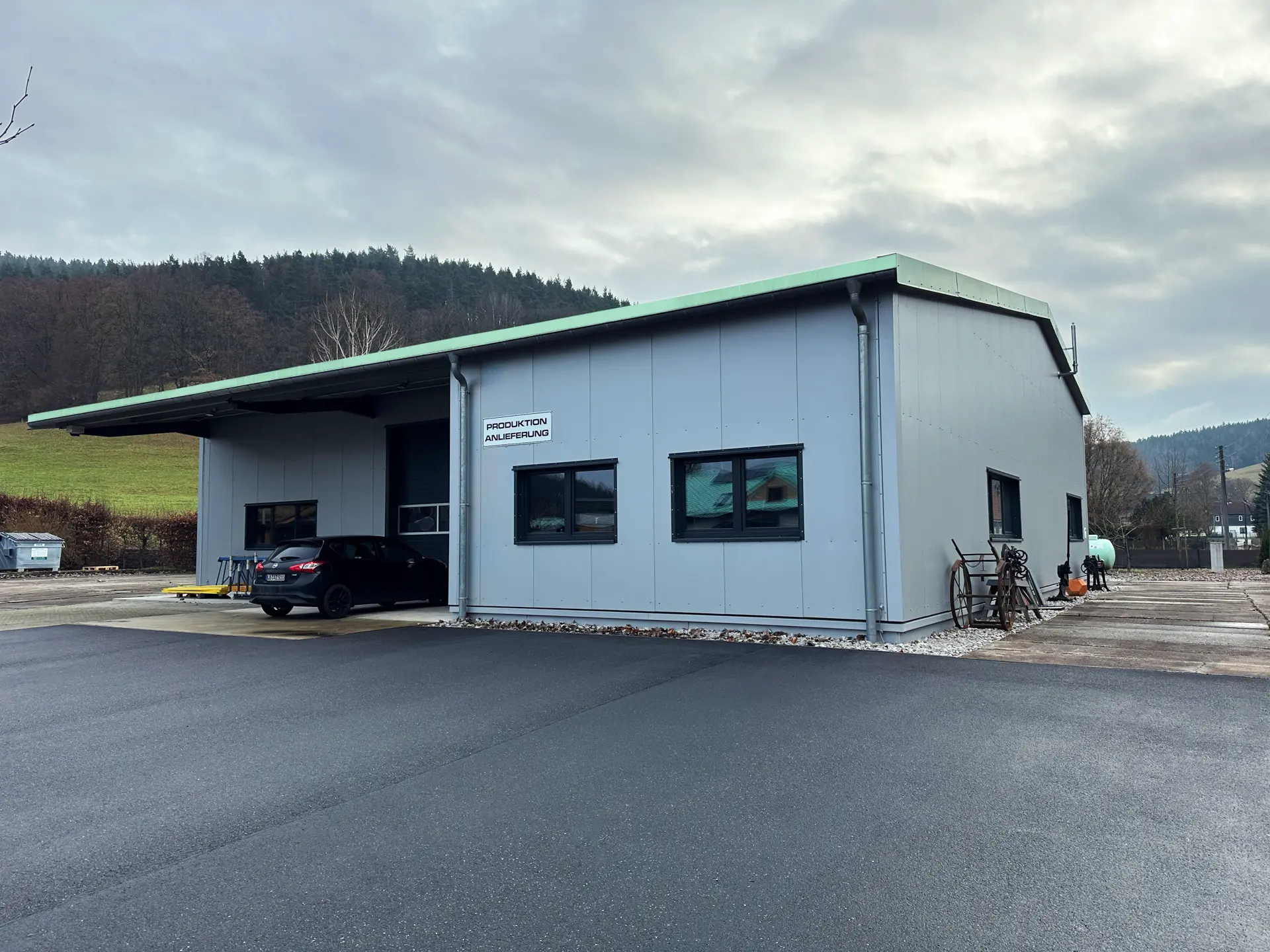
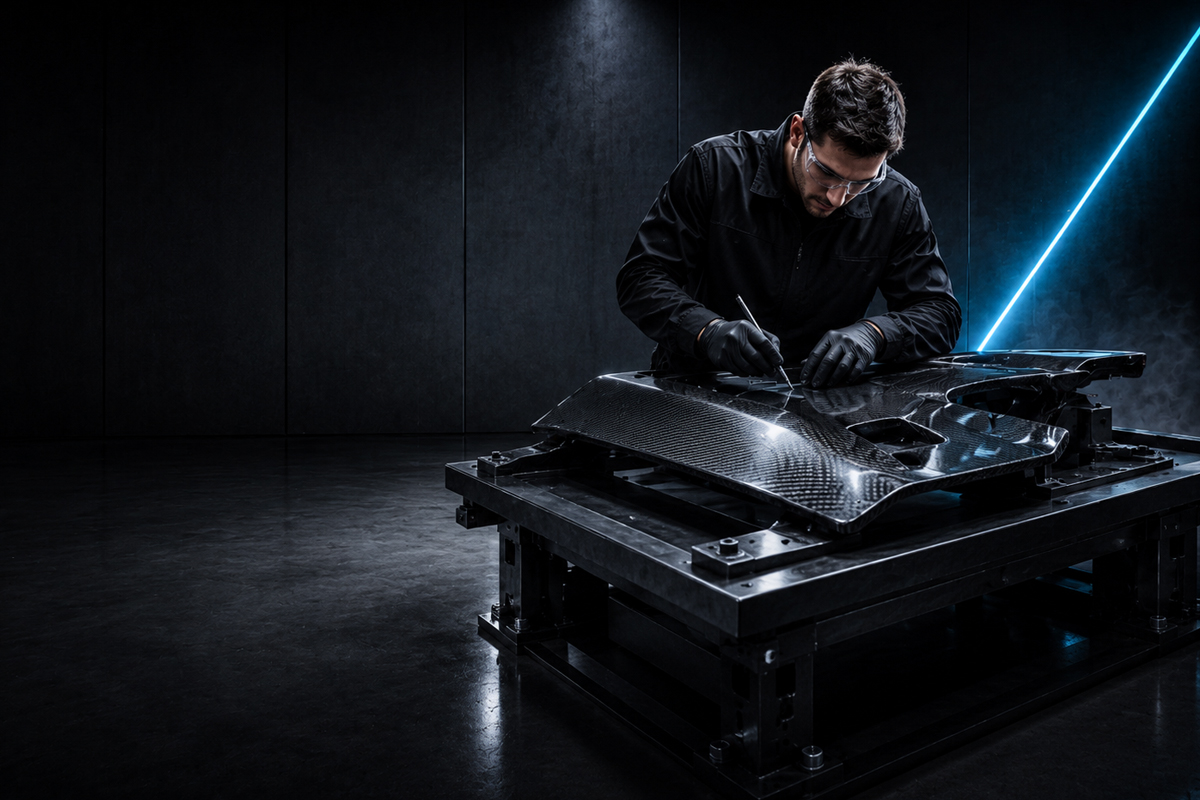
Composite World GmbH has been manufacturing high-quality carbon fibre parts using the prepreg process since 2002.
With modern plant technology, artisanal precision, and genuine composite experience, high-performance components for demanding applications are created in Thuringia. From design to series production, we cover all steps of composite manufacturing – flexibly, efficiently, and at the highest level.
Motorsport and Industry
Services
composite manufacturing
– flexibly, efficiently, and at the highest level.Service Steps
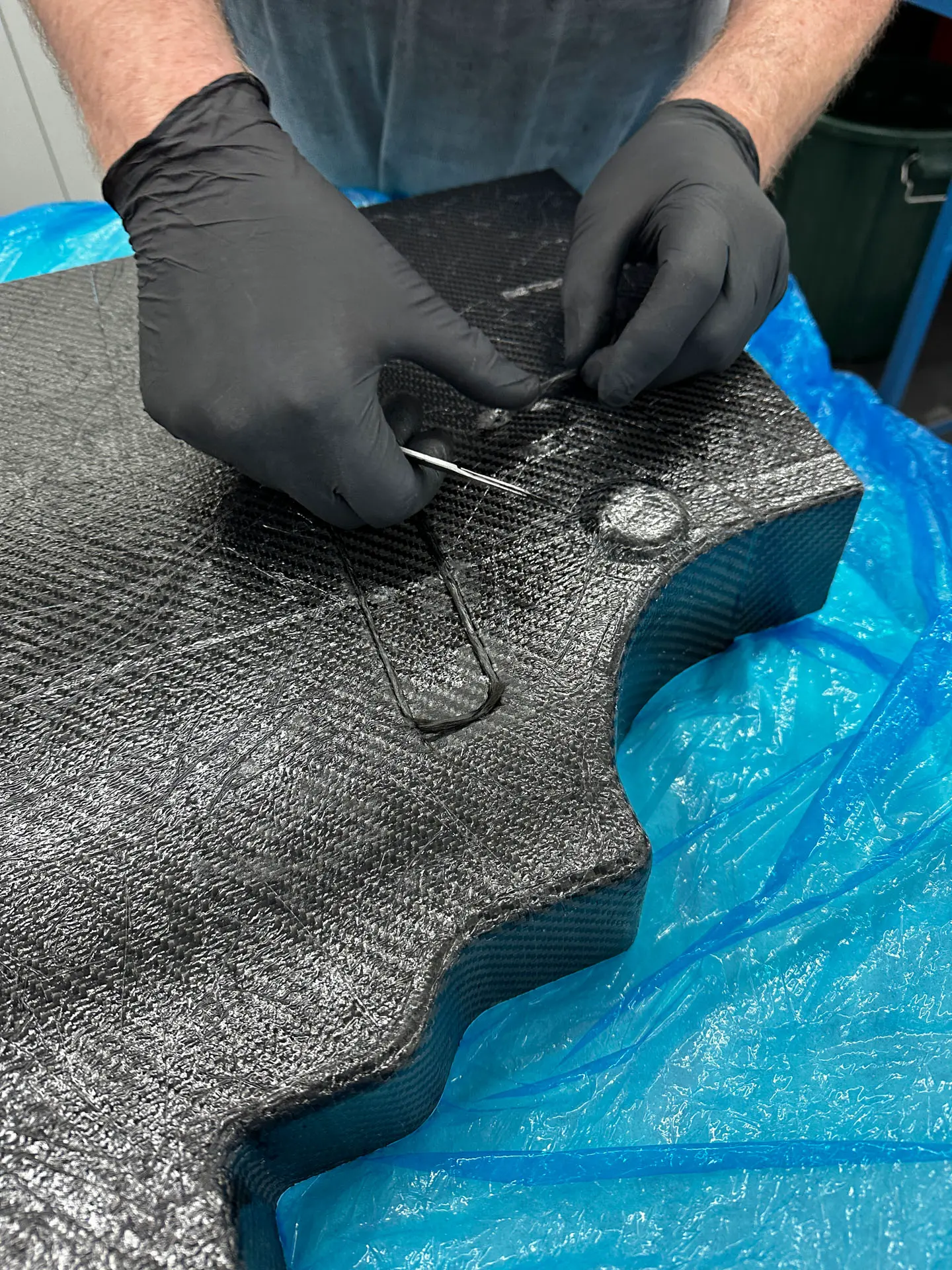
01. Design
02. Prototyping
03. Mould Making and Tool Production
04. Series Production
Finally, we produce your parts from the tools. Among other things, we offer the prepreg process, where the moulds and components are heated and pressurized in an autoclave for several hours to achieve the best possible strength and surface stability.
Manufacturing Processes
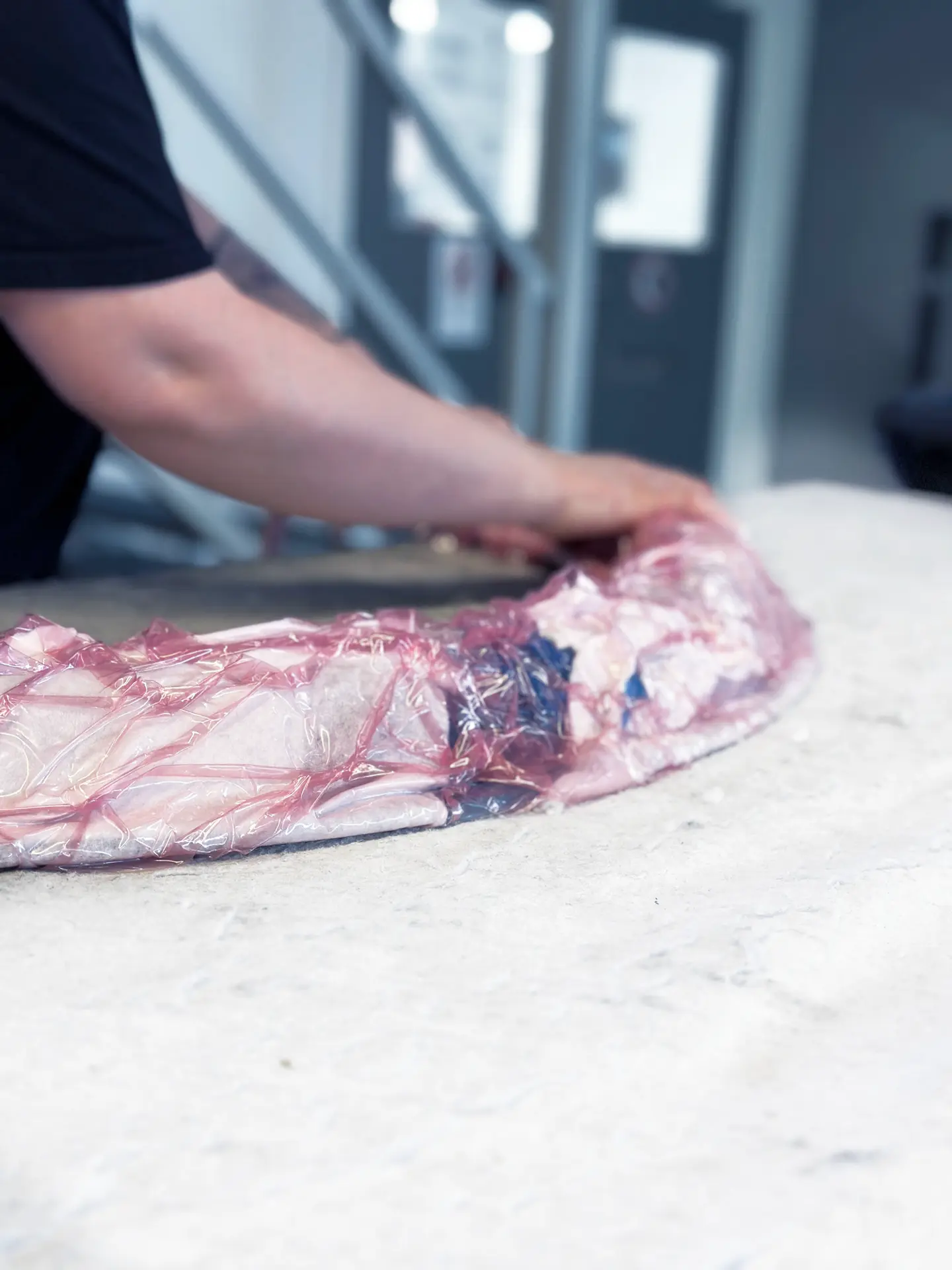
01. Wet Lay-up / Hand Lay-up
In wet lay-up, carbon fiber fabrics are manually impregnated with resin and placed into the mould. This process is flexible, economical, and ideal for prototypes, one-off parts, or small series.
Advantages:
Low tool costs, high flexibility, ideal for prototypes and custom-made products.
Disadvantages:
Fluctuating component quality, higher weight due to less controlled resin content, significantly higher time expenditure for a proper surface finish (paint).
02. Vacuum Infusion
Vacuum infusion is an efficient process for larger carbon parts. Dry fibers are placed in the mould, sealed airtight, and impregnated with resin using vacuum. This results in lightweight and stable components at comparatively moderate costs.
Advantages:
Cost-efficient, good for large components, less material waste, solid component quality.
Disadvantages:
Longer process times, quality more dependent on process setup, usually only one visible side with high surface quality.
03. Prepreg Autoclave Process
The prepreg autoclave process stands for the highest quality in carbon lightweight construction. Pre-impregnated carbon fiber layers with a resin system are precisely placed into the mould and cured under pressure and temperature in the autoclave. The result: extremely lightweight, resilient, and reproducible components with a premium surface.
Advantages:
Very high component quality, low weight, excellent strength, perfect fibre orientation, high-quality surfaces.
Disadvantages:
High tool and process costs
Expertise for Demanding Applications.
Industries We Serve.
Motorsport Teams

Tuning Companies
Automotive Suppliers
Suppliers for Other Carbon Fiber Productions
Industry
Composites
Carbon where it counts—from visible trim parts to heavy-duty structural parts.
Body parts
We design and manufacture everything from technical parts to visible carbon parts, including body parts for various applications and providers. We are particularly proud of our outstanding quality.
Technical parts
In addition to perfect visible carbon parts, we also manufacture technical components for a wide range of applications. Examples include seat bases for racing motorcycles, brake cooling ducts for motorsport vehicles, and other technical parts.
Inside Composites
The weave determines not only the appearance of a carbon part, but also its processing, moldability, and technical properties. Whether classic twill weave, precise plain weave, or modern Forged Carbon — each material brings its own strengths.
We select the appropriate carbon structure for your project, combining technical performance with a surface that makes a visible impression.
More Knowledge and Insights
Composite Materials
Twill is the classic choice for high-quality visible carbon parts. The fibers run in a staggered weave pattern, creating the typical diagonal carbon structure. The material appears dynamic, technical, and very sophisticated — ideal for components where performance and aesthetics count equally.
Manufacturing
In a twill weave, warp and weft threads are interwoven in a staggered rhythm, for example in a 2/2 twill. This creates the characteristic diagonal structure. The fabric offers good drapability and adapts cleanly even to complex shapes.
Advantages
Very high-quality carbon appearance, good drapability, ideal for curved and complex components, good mechanical properties.
Disadvantages
Slightly more sensitive to distortion during cutting and laminating, not quite as dimensionally stable as plain weave, exact alignment requires experience.
Best Areas of Application
Visible carbon components, interior and exterior parts, motorsport, automotive, motorcycle parts, design components, fairings, and covers.
Plain weave is the precise and stable weave among carbon fabrics. The uniform cross pattern creates a calm, technical appearance with high dimensional stability. This weave is particularly suitable for flat or slightly curved components where dimensional accuracy and clean processing are the focus.
Manufacturing
In a plain weave, each warp thread is guided alternately over and under each weft thread. This creates a tight, uniform grid. This structure makes the fabric particularly stable and reduces fiber slippage during processing.
Advantages
High dimensional stability, clean fiber placement, good dimensional accuracy, lower tendency to distort, clear technical appearance.
Disadvantages
Less flexible for complex shapes, lower drapability than twill, can form wrinkles more quickly with tight radii.
Best Areas of Application
Flat carbon plates, technical covers, sandwich parts, structural parts, model making, mechanical engineering, aerospace components, and components with clear geometry.
Forged Carbon stands for a modern, striking carbon look with a unique character. Instead of a classic weave pattern, an irregular, marbled structure is created. This makes every component unique — sporty, exclusive, and particularly expressive.
Manufacturing
Forged Carbon is manufactured from short, chopped carbon fibers or carbon chips. These are mixed with resin, placed in a tool, and pressed under pressure and temperature. During this process, the fibers align randomly, creating the typical speckled surface.
Advantages
Unique appearance, good moldability, ideal for complex geometries, short process times, efficient material utilization.
Disadvantages
No continuous fiber structure, mechanical properties less specifically controllable than with fabrics, anisotropic high-performance structures only possible to a limited extent.
Best Areas of Application
Design parts, luxury and lifestyle products, automotive interiors, trim strips, housings, accessories, sporting goods, watches, knife handles, and exclusive visible components.